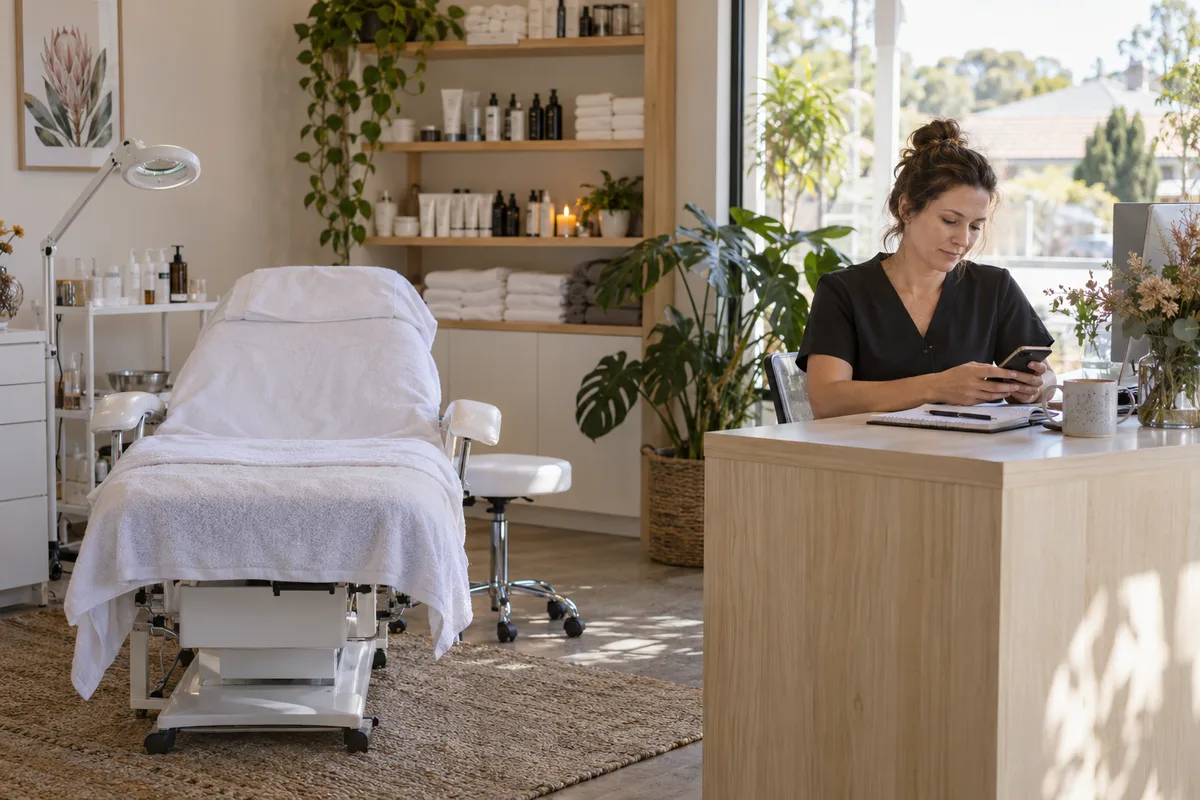
The bed is ready, the towels are folded, and your 2 pm client has just cancelled. You’ve got an hour to fill and a surprisingly strong urge to post “ANYONE WANT A FACIAL???” on every account you own.
Understandable. Give yourself five minutes first. A useful cancellation offer tells someone exactly what they can book and gives you enough room to deliver it properly. A rushed discount can leave you doing a longer treatment for less money, then running late for the client who actually did turn up.
Start with the gap you actually have
Look at the diary before choosing a service. A cancelled 60-minute treatment doesn’t automatically leave 60 minutes for a new customer. You might need a consultation, a room reset, or time to check whether the treatment is suitable. Keep those steps. The empty appointment hasn’t made them optional.
Write down the latest arrival time, the latest finish time and which staff member is available. Then choose a treatment that fits comfortably. If a new client needs a patch test or an earlier consultation under your usual procedures, don’t turn that service into a same-day special. Offer something you can safely provide, or leave the slot open.
You can also split a larger gap, but only if the timing works. Two short appointments need two arrivals, two check-ins and two resets. The diary may look beautifully full while the person doing the work is quietly reconsidering their career.
Pick one service and make the boundaries clear
“Beauty appointments available” leaves the customer doing the hard part. They have to ask which treatments, what time, how much and whether they’re eligible. By the time you’ve answered, the opening may be gone.
A specific offer gives them a decision they can make. Here’s an illustrative example, with a made-up price and time. It isn’t a live offer or a recommended treatment price.
Express manicure, Thursday at 2 pm, $45
One 30-minute appointment at our salon in Toowoomba. Includes nail shaping, cuticle care and standard polish. Gel removal, extensions and nail art aren’t included. Please arrive five minutes early. Send your request by 12.30 pm so we can confirm the appointment with you. Payment is made directly to the salon.
That tells a customer what they’re buying and helps someone with a full set of acrylics realise this probably isn’t their appointment. You can still sound like yourself. You don’t need “indulge in a luxurious pampering experience” when “standard polish” is doing useful work.
Set out your cancellation terms before someone requests the appointment. If you normally need a deposit, explain the amount and how it will be arranged directly with you. IdleHours doesn’t collect service payments or deposits for you.
Decide what makes it worthwhile
You don’t have to halve the price because someone cancelled. Start with what the appointment will cost you to deliver: consumables, any extra wages, cleaning and the time needed to handle the request. Consider whether a smaller service at a sensible price fits better than heavily discounting a longer one.
Keep any saving honest. If you show a usual price beside an offer price, it needs to be a genuine comparison you can support. The ACCC’s price display guidance explains why an inflated “was” price or a permanent “special” can mislead customers. Sometimes a clear total price is all the offer needs.
For a worked calculation, see our guide to pricing a quiet hour. Do the sums before posting, while there’s still time to decide that the offer isn’t worth it.
Leave time to answer and confirm
An appointment starting at 2 pm shouldn’t still be collecting requests at 1.59 pm. Choose a cutoff that lets you read the request, check suitability and give the customer reasonable travel time. For the example above, 12.30 pm leaves a 90-minute window. Your location and service might need more.
On IdleHours, a request is pending until you accept it. Keep the capacity to the number you can actually take, and have someone check the inbox. If you’re halfway through a treatment and nobody else can reply, a later opening is a better candidate than the one immediately after it.
Once confirmed, send the useful details in the conversation: arrival time, address, parking and anything the customer needs to do beforehand. If the appointment fills through your own booking system instead, withdraw the offer before accepting an IdleHours request. Two people turning up for the same chair is a fairly poor start to a relaxing afternoon.
Make the next cancellation less of a scramble
Keep a short list of services that work at short notice, with a price you’re comfortable offering and a photo of your own work or space. Ask staff which appointments are easy to slot in and which tend to overrun. Their answer will usually be more useful than a beautifully colour-coded marketing spreadsheet.
You can prepare draft offers in IdleHours. Check the dates, price, capacity and terms each time before publishing; an old draft with last Thursday’s details is not a shortcut. While IdleHours is coming soon, you can set up those drafts ready for launch.
After trying an offer, note whether the customer attended, what they paid and whether the appointment was worth the work. If most requests arrive too late, move the cutoff earlier or give the next offer more notice. If everyone asks whether removal is included, fix the wording.
And if the gap doesn’t fill, use the time deliberately. Stocktake, training, a proper lunch. You’re allowed to decide that a quiet half-hour is better than a booking that costs you money.